On July 5, 2026, ERR journalist Rene Kundla covers the topic of the removal of Soviet-era monuments.
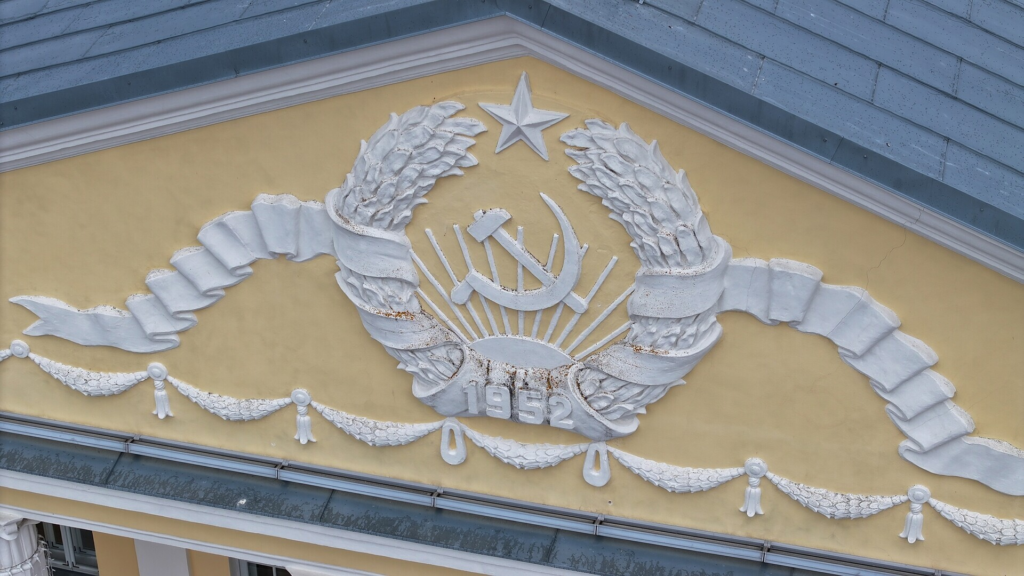
Due to inadequate legislation, a large number of red symbols have not been removed from public spaces. Some building managers have sought solutions to cover up the symbols, but according to Minister of Justice Liisa Pakosta (Eesti 200), this is not sufficient. She cites the Ministry of Culture’s resistance as one reason for the delay in amending the law.
President Alar Karis declined to promulgate the Building Code—specifically, the so-called “Law on the Removal of Red Symbols from Public Spaces”—in March 2023. The draft law, which the President deemed unconstitutional, has not been amended since then.
“This bill is pending in the Riigikogu, awaiting a resolution, as some—including myself—believe that buildings featuring such ‘red symbols,’ which were built precisely to demonstrate the presence of the occupying power, should not be considered a valuable part of Estonia’s cultural heritage and should be removed from protected status. And then there is a small group of other people who say that they should still be protected. This is a matter of debate,” said Pakosta.
For example, citing the lack of a relevant legal provision, the Sillamäe city government has left a massive red monument in the city center without removing it. Now the ministry plans to introduce a new draft bill.
“We have an agreement with the Ministry of Justice that they will draft a new bill; it will be submitted to the Riigikogu in the fall, and the Economic Affairs Committee is ready to review it,” said Marek Reinaas (Eesti 200), chairman of the Riigikogu Economic Affairs Committee.
Reinaas justified the need for the new bill by noting that times have changed in the meantime and that the fact that most of the remaining red symbols are now protected as cultural heritage should be taken into account.
“Compared to 2023, when the president did not promulgate this law, much of the red symbolism and many red monuments have found their rightful place in the dustbin of history—in other words, time has moved on, and in many ways, life itself has made its own corrections,” said Reinaas.
Until the law was amended, some building managers had sought various ways to conceal red symbols.
“They’ve now started doing this at the former Russian Cultural Center. I’d say it’s better than nothing, but as a country, we should still be able to do more,” noted Pakosta.
Pakosta attributed the delay in amending the law to the fact that the main opposition has come from the Ministry of Culture. However, the ministry stated that no issues related to the law had been brought to their attention since the spring of 2025.
Editor: Marko Tooming