SEMINAR DAY: HOW TO COMMEMORATE THE TARTU CONCENTRATION CAMP?
Tartu City Museum
September 25, 2026
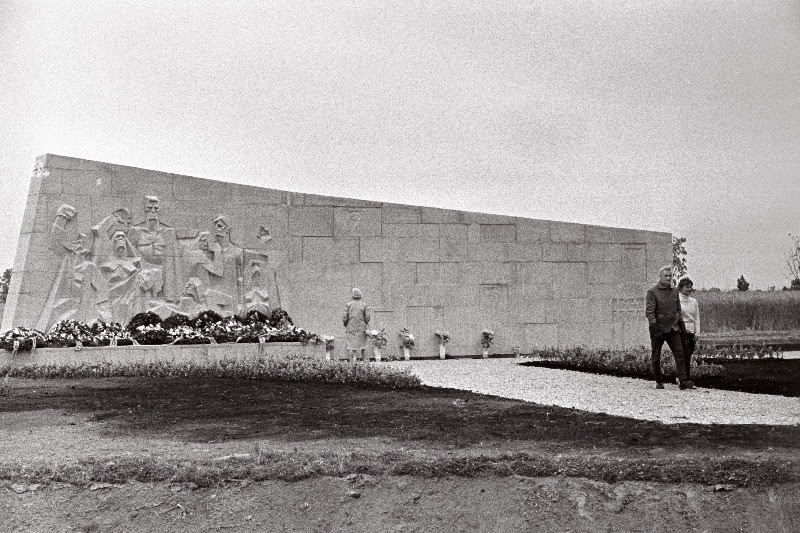
The seminar day raises the question of how to commemorate the concentration camp and its victims in today’s Estonian urban space. During the German occupation, 3,500–4,000 people were executed in the Tartu concentration camp. Among them were individuals who had collaborated with the Soviet regime, local Jewish and Roma families from Tartu, as well as Jewish men, women, and children brought from Latvia. Today, the only markers referencing the concentration camp are a Soviet-era memorial near Tartu in Lemmatsi (1964, created by Elmar Rebane and Väino Tamm) and two smaller memorial stones at the Lohkva Jewish cemetery. Yet, the concentration camp network spanned the entire city. In light of recent research, the commemoration of the concentration camp in independent Estonia has remained unupdated both in cultural memory and in public space.
Historians, memory and urban space experts, and artists will present at the seminar to reflect on the history of the concentration camp and its place in the memory landscape of Tartu and Estonia. The broader goal is to find a solution that connects the various sites associated with the concentration camp into a unified, contentful, and spatially cohesive whole. As a first step, we wish to create a space for discussion between experts from various fields and city residents, serving as a foundation for future decisions and initiatives to make the history of the Tartu concentration camp more visible. We ask how to engage with Soviet-era memorial sites and present history in public space in a way that considers updated historical knowledge and a changed social and cultural context.
In addition to presentations and discussions, the seminar day includes a bus tour to sites associated with the concentration camp and a visit to the Lemmatsi memorial.
SCHEDULE
11:15
Introduction and opening remarks – Risto Lehiste (Tartu City Museum), Kristo Nurmis (Tallinn University)
Session I – History of the Concentration Camp in Tartu
- 11:30–11:50 Riho Västrik (Tallinn University) – The Concentration Camp System in Estonia During the German Occupation
- 11:50–12:10 Kristo Nurmis (Tallinn University) – The Concentration Camp and Communal Violence in Tartu During the German Occupation
- 12:10–12:30 Meelis Maripuu (Estonian Institute of Historical Memory) – The Soviet Regime and the Tartu Concentration Camp
- 12:30–12:45 Discussion – moderated by Linda Kaljundi (Estonian Academy of Arts)
12:45–13:30 Lunch
Session II – Commemorating the Concentration Camp – A Comparative View
- 13:30–13:50 Kädi Talvoja (Estonian Academy of Arts) – The Lemmatsi Memorial – An Art Historical View
- 13:50–14:10 Eneken Laanes (Tallinn University) – The German Occupation in Cultural Memory: Conceptual Starting Points and Possibilities
- 14:10–14:30 Hellar Lill (Estonian War Museum – General Laidoner Museum) – Exhumations and Reinterments of World War II Victims
- 14:30–14:45 Discussion – moderated by Gregor Taul (Estonian Academy of Arts)
14:45–15:00 Coffee break
Session III
- 15:00–16:00 Discussion – How to Commemorate the Tartu Concentration Camp in Public Space?Moderated by Mariann Raisma (University of Tartu Museum)Participants: Ants Siim (Tartu City Museum), Karin Bachmann (Kino Landscape Architects), Kertu Vuks (Tartu City Government), Gennadi Gramberg (Estonian Jewish Museum), Taavi Piibemann (Pallas University of Applied Sciences)
- 16:15–18:00 Bus tour of sites connected to the Tartu concentration camp and a visit to the Lemmatsi memorial. Tour led by Indrek Mustimets. Departure and arrival at the Tartu City Museum.
Participation in the seminar day is free of charge, but please register HERE no later than September 20.
The event is organized by the Tartu City Museum, Tartu City Government, and the joint project of the Estonian Academy of Arts and Tallinn University “New Frames for the Monument”.
On behalf of the organizing committee:
Maris Veeremäe, tel +372 56226344, email maris.veeremae@artun.ee
Martin Jaigma, tel +372 746 1914, email martin.jaigma@muuseum.tartu.ee