On June 30, during Vikerraadio’s morning program, journalists Kirke Ert and Taavi Libe interviewed Linda Kaljund, the director of the project “New Frames for Monuments,” on topics related to complex heritage.
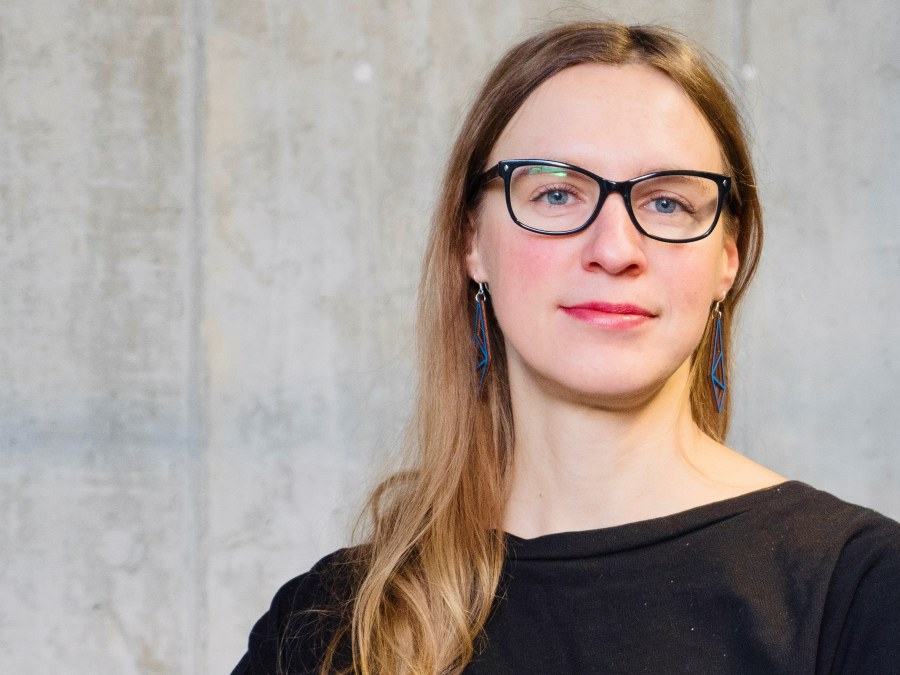
According to art historian Linda Kaljundi, removing works of art with a complex history from public spaces does not consign them to the past. In her view, such heritage should be preserved whenever possible and helped to be understood through explanations, exhibitions, and artistic interventions.
Sotheby’s art auction begins on Wednesday, featuring a 17th-century painting by Rembrandt as one of the highlights. Art historians and restorers who have worked on this painting discovered that it was painted over at some point: while Rembrandt originally depicted, among other things, a naked child and a man wearing a turban, over the centuries the turban has become a Dutch cap and the naked boy has been clothed.
According to art historian Linda Kaljundi, such extensive alterations are rare in art history, but modern technical analyses are making it increasingly possible to uncover earlier layers in paintings.
“We are learning more and more about these overpaintings because infrared analysis is much simpler and more affordable today, and it is being conducted frequently, including in Estonia. Most often, such studies reveal various underdrawings, sketches, and drafts. While artists have often altered their final versions, they have usually done so to achieve a better composition,” she said on “Vikerhommik.”
According to Kaljundi, such studies are often conducted when it is necessary to confirm the authorship of a work or when a painting is undergoing restoration. As a well-known example, he cited the studies of Hermen Rode’s high altar at St. Nicholas’ Church in Tallinn. During that process, it was discovered that one painting originally depicted a cat with a mouse and a chamber pot beneath Emperor Constantine’s bed, which the artist later removed from the final version.
“Art historian Anu Mänd has studied this and discussed whether the artist wanted a cleaner, clearer composition or began to feel that the scene would otherwise have a too-domestic atmosphere,” she explained.
According to Kaljundi, the principles of restoration have changed significantly in Estonia over the past few decades. Whereas in the past, efforts were made to restore works to their presumed original state, today the approach is to intervene as little as possible and to value the layers that have accumulated over time. For example, he recalled a rare canvas ceiling painting discovered in 2022 in the Knights’ Hall on Toompea, where the restoration process preserved even its wear and damage.
Kaljundi emphasized that today’s professional conservators are capable of carrying out such work safely, and that the greatest danger arises when amateurs attempt to handle valuable finds on their own.
“We have examples from more recent times in Estonia of some churches where parishioners or pastors have taken it upon themselves to [restore] them, but in most cases this involves repainting or a desire to decorate. But I wouldn’t demonize it all that much, because it’s also interesting when people actively engage with their heritage,” she said.
The layers of meaning in works of art often reflect changes in society and politics. In Estonia, at the beginning of Soviet rule, a large number of works depicting the War of Independence and the Republic of Estonia were destroyed. Today, however, debates tend to center on how to exhibit art from the Soviet era.
“An interesting example from a more recent period concerns Evald Okas’s panel ‘Friendship of Nations,’ completed at Maarjamäe Castle toward the end of the Soviet era, which has also received a great deal of attention lately and has been the subject of much debate over whether it should be displayed at the Estonian History Museum there or not. There is a legend circulating that Evald Okas offered to replace the red flags and red symbols with blue-black-and-white flags, but the museum said at the time that they did not want that,” Kaljundi said. After conservation, Okas’s work was covered with milky glass. This allows it to be revealed or concealed as desired.
According to Kaljundi, Estonian society is currently undergoing an exciting process. “At the Mere Cultural Center, there are plans to cover up the Stalinist ceiling mural, and following the full-scale war in Ukraine, there has been a great deal of discussion about whether and how to display Soviet-era heritage—sculptures and paintings—in public spaces, and whether they should be removed or covered up,” he said.
The Academy of Arts is addressing this issue through the project “How to Reframe Monuments,” in which participants have proposed various solutions that would allow the art to remain in place.
“The idea is also that removing art does not erase a complex history, but by adding artistic interventions or various exhibition elements and explanations, we can preserve the heritage while also addressing that complex history,” Kaljundi explained.
Editor: Karmen Rebane
Source: “Vikerhommik,” interviewed by Kirke Ert and Taavi Libe